 Security Alarms
Categories
- Conventional fire alarm systems
- Wireless Fire Alarm System
- LPCB addressable fire alarm
- Gas detection alarm system
- Electrical Fire Monitoring
- Addressable fire alarm system
- Fire Alarm Fire Extinguishing
- Fire Alarm gas fire-extinguish
- Commercial Burglar Alarm System
- Security Service Equipment
- Commercial security solutions
- Industry Security Equipment
Manufacturers
Languages


Fire Fighting Control Ways
Differences and Applications of Automatic Control, Manual Control, and Mechanical Emergency Operation in Fire Protection Systems.
Automatic Control
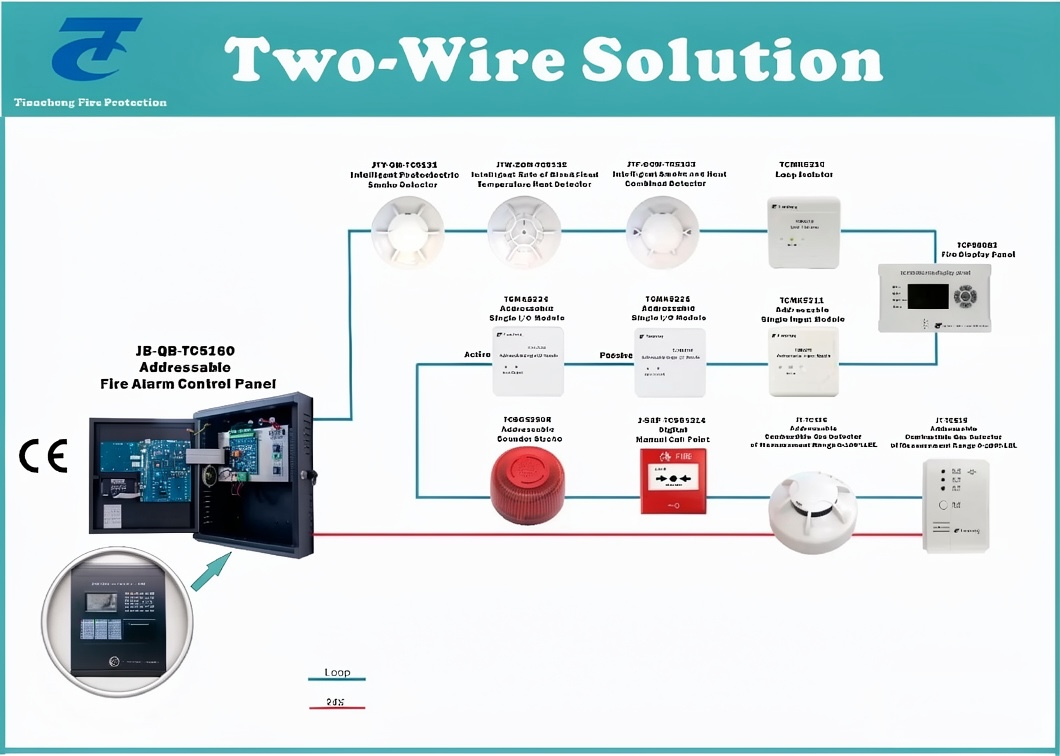
Automatic control is commonly referred to as linkage control. According to code requirements, a fire alarm linkage controller shall be capable of performing control functions in both automatic and manual modes.
Automatic control is centered on the fire alarm linkage controller. Alarm signals from detection and triggering devices are sent to the fire alarm linkage controller. The controller judges based on pre-set logic and issues linkage control commands to controlled fire equipment, thereby realizing fire linkage control.
Automatic control is vulnerable to factors such as product and construction quality, operating environment, and external interference.Therefore, the linkage trigger signal shall adopt an AND logic combination of alarm signals from two independent detection/triggering devices, and shall be valid only when the fire alarm linkage controller is in the automatic state.Different systems or functional equipment have different requirements for linkage control.
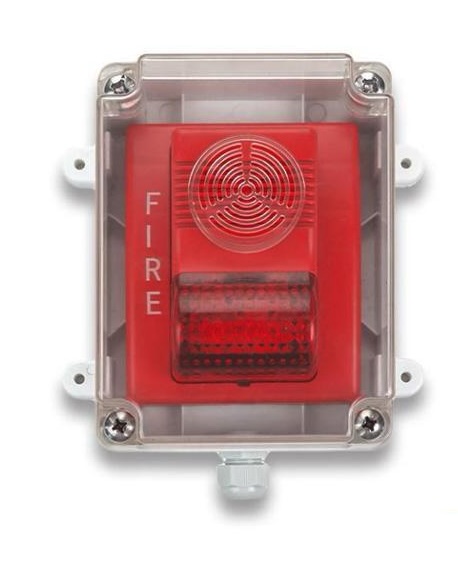
Example:Linkage control of fire audible and visual alarms shall be triggered by the AND logic combination of alarm signals from two independent detectors or one detector plus one manual call point within the same alarm zone.
Manual Control
Manual control in fire protection systems usually refers to electrical manual control realized via electrical circuits.It mainly includes remote manual control (fire control room) and local manual control.
1. Remote Manual Control (Fire Control Room)
It mainly includes manual control via the fire alarm linkage controller and manual control via the direct manual control unit.
Corresponding to the automatic control described above, the fire alarm linkage controller shall simultaneously be capable of manual control for each controlled device.In practice, a bus control panel can be equipped for simplified operation, providing a convenient way to start bus-controlled devices instead of complex menu operations.Automatic and manual control functions of the fire alarm linkage controller share the same communication bus.
The direct manual control unit (also known as multi-wire control panel / direct manual control panel) is installed in the fire control room together with the fire alarm linkage controller.
Critical equipment such as fire pumps, supply air fans, and exhaust smoke fans shall be capable of direct manual control from the fire control room via dedicated wiring between the start/stop buttons of the direct manual control unit and the local control cabinets of the equipment.
Deluge valve assemblies, relevant control valves for water curtain systems, pre-action valve assemblies, and electric valves before the quick exhaust valve inlet of pre-action systems shall also be directly activated via the direct manual control unit using dedicated lines.
Example:In a pre-action system, the actuator of the pre-action valve assembly, the electric valve before the quick exhaust valve inlet, and the starter cabinet of the fire pump set shall each be connected via dedicated lines to the multi-wire control panel of the fire alarm linkage controller for direct remote manual control in the fire control room.
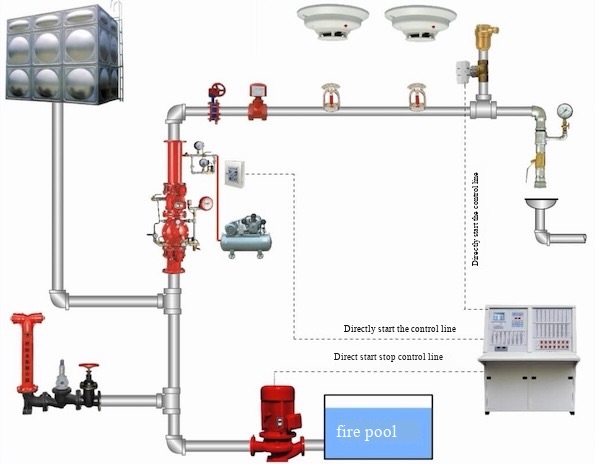
Required equipment for dedicated multi-wire connection:Fire pump control cabinets, exhaust smoke fan control cabinets, supply air fan control cabinets, pre-action valve assemblies, electric valves before quick exhaust valves, deluge valve assemblies, control valves for water curtain systems, control valves for foam systems, etc.
It should be noted that manual control via the fire alarm linkage controller and manual control via the direct manual control unit are distinct concepts:
The former is a standard function, transmitted via the communication bus and requiring module conversion.
The latter is an optional function using one-to-one dedicated multi-wiring, with high reliability, independent and unaffected by faults or mode status of the former.
2. Local Manual Control
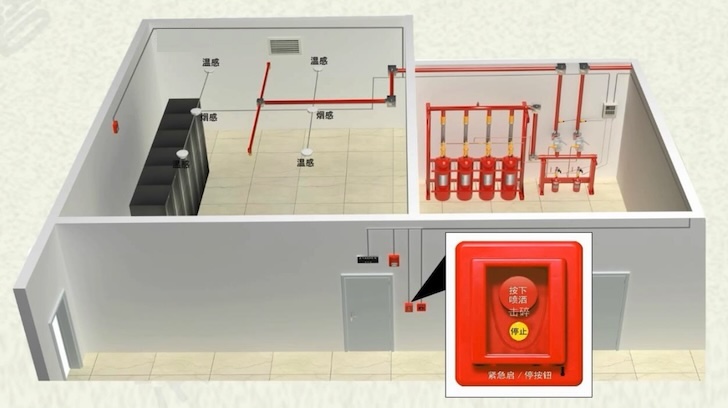
Local manual control is mainly realized through on-site manual control buttons, including:
Local manual control near protected objects/areas:
Special automatic fire extinguishing systems (e.g., gas extinguishing) are equipped with emergency start/stop buttons outside the protected zone for on-site emergency operation.
Local manual control of fire equipment:
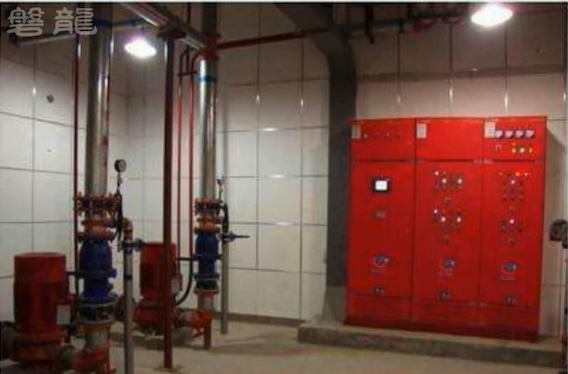
Local control cabinets for fire pumps, supply air fans, exhaust smoke fans, etc., shall be capable of manual start and stop.
Mechanical Emergency Operation
Mechanical emergency operation is an emergency measure when both automatic control and electrical manual control fail (e.g., power outage). It is actually a special form of manual control.
Main types:
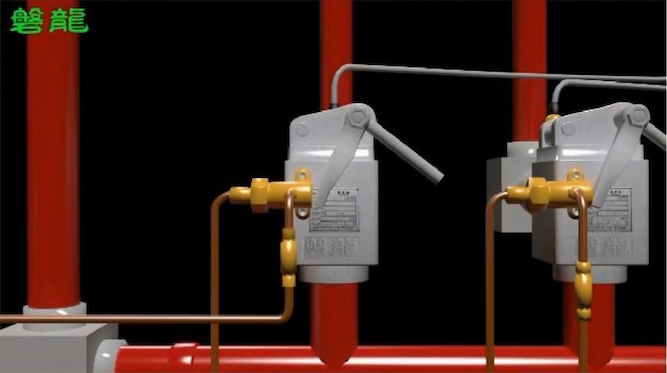
Pure mechanical operation:
Manually push the operating lever to open selector valves, manually open electric control valves, press the start button on gas cylinder valves to activate cylinders, etc.
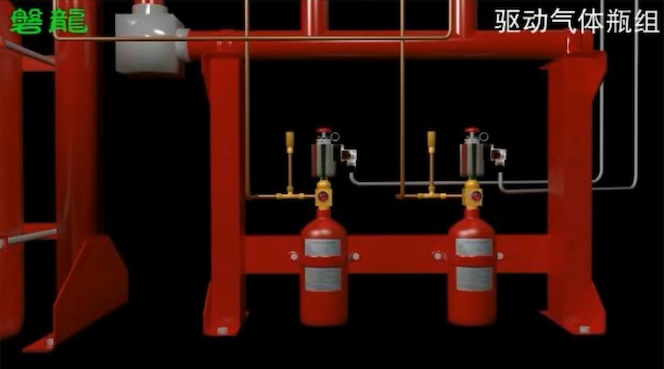
Mechanical + pneumatic operation:
For piped gas extinguishing systems, manually press the driver start button to open the driver cylinder bank; the driving gas pushes the selector valve and opens the extinguishing cylinder bank for emergency activation.
Mechanical + transmission operation:
For high-mounted normally closed exhaust smoke outlets/supply air outlets, a cable device extends the manual control switch to an accessible position (1.3m–1.5m above floor level).
Mechanical + hydraulic operation:
Emergency start of deluge valve assemblies and pre-action valve assemblies is achieved by manually opening control valves to drain water, reducing pressure in the control chamber to activate the valves.
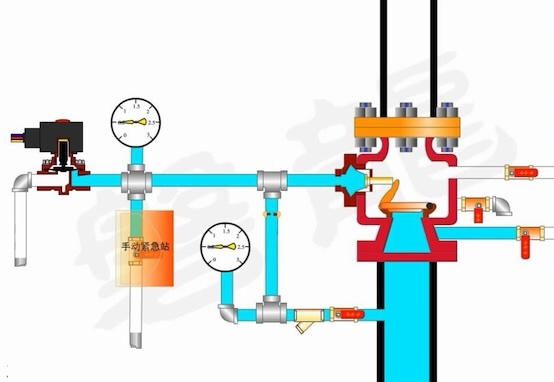
Notes:Although codes specify emergency operation functions only for certain equipment, most electrically controlled actuators are equipped with emergency operation functions. Common examples include electric valves, solenoid valves, electromagnetic starters, and various on-off valves, all providing measures for power outages and control system failures.
More Information
Bestsellers
- High Sensibility smoke and heat...
- Audio visual alarm conventional...
- Conventional fire alarm sounder...
- Conventional manual call point ...
- Horn strobe flash and sounder fire...
- PIR detector solar power wireless...
- Wireless infrared beam security...
- 2 fire zone Mini conventional fire...
- Wireless Manual Call Point